Skin tech never saw dark skin. Oyster grew up on it.
Most analysis was trained on lighter skin and quietly fails on deeper tones. Oyster reads every shade with the same precision, and it is measured to prove it.
The most accurate skin analysis on deep skin. By a wide margin.
The same selfie, read the same way on Fitzpatrick VI as on Fitzpatrick I, so no customer gets a worse answer because of her shade.
Trained on the largest melanin-rich dataset in the industry.
Two million real skin images across seven countries, weighted toward deeper tones, so the analysis is just as sharp on the deepest skin as the lightest. That data is the moat, and it grows with every scan.
See the accuracy research ↗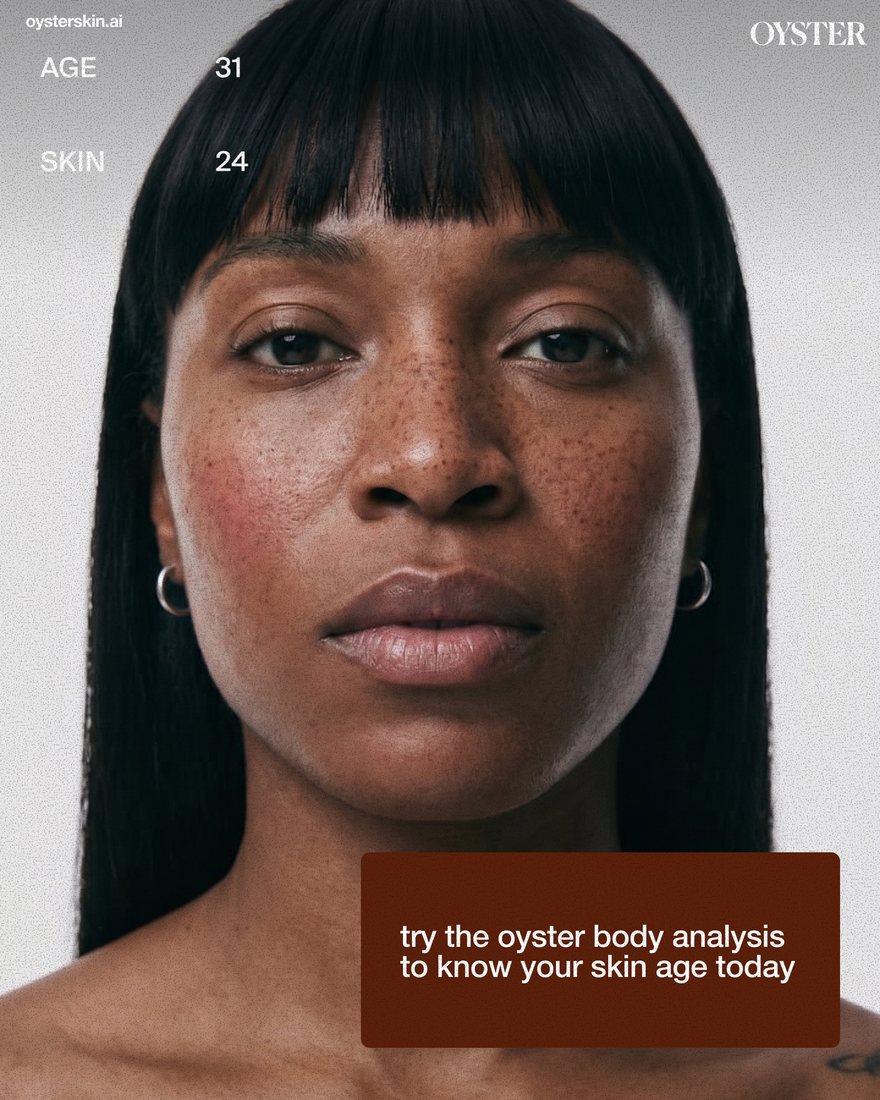
Measured across every skin type, not just the light end.
Most skin AI reports one overall accuracy number that hides how it does on Fitzpatrick V and VI. Oyster measures accuracy per skin type and holds the deep end to the same bar as the rest.
How accuracy is measured ↗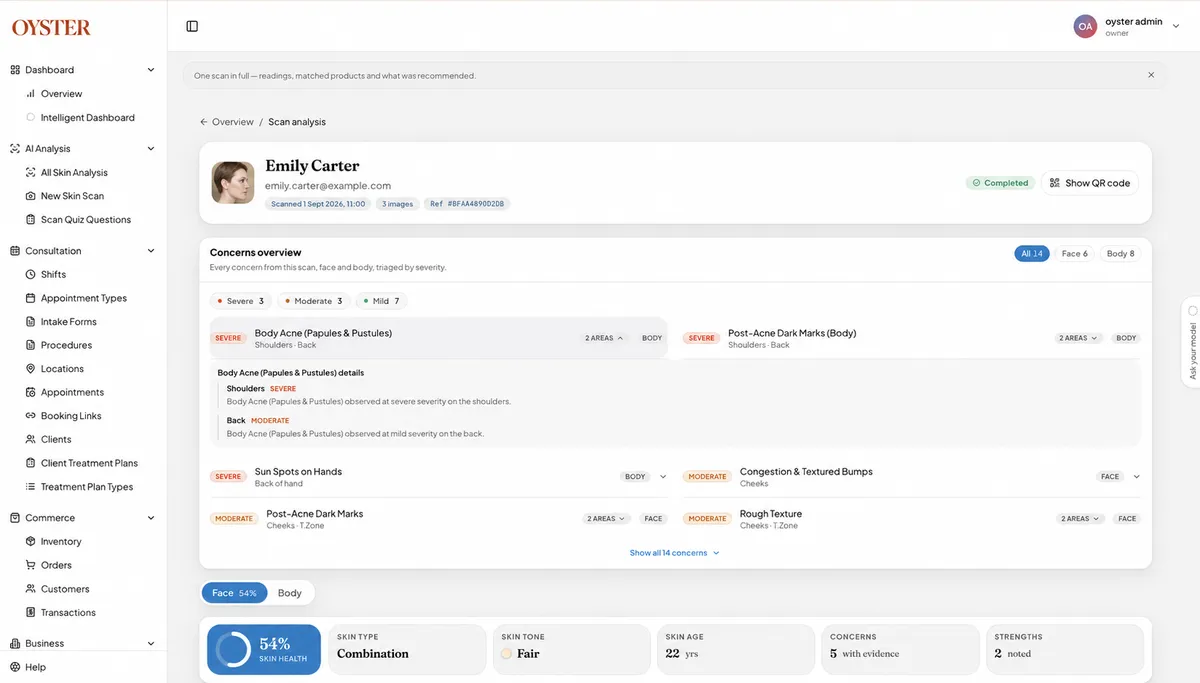
Built for the concerns that actually show up on deeper skin.
Hyperpigmentation, melasma, post-inflammatory marks and uneven tone are the concerns deeper skin brings to the counter most. Oyster measures each one with a number and a place, so the recommendation fits the skin in front of you.
Read: hyperpigmentation on dark skin ↗Measured, published, and open to a second opinion.
Accuracy on deeper skin is a claim you can check, not take on faith. Oyster publishes how the engine performs by skin type and welcomes independent review from the clinicians who see these patients every day.
Read Oyster Studies ↗
Held to the same standard on Fitzpatrick VI as Fitzpatrick I, and rising with every scan.
Why most skin AI fails on dark skin.
Three gaps that Oyster was built, from the data up, to close.
Skewed training data
Trained mostly on lighter skin, so deeper tones sit outside what the model has seen.
Lighting bias
Exposure and colour tuned for light skin wash out the very signals that matter on deep skin.
Wrong concerns
Blind to hyperpigmentation and post-inflammatory marks, the concerns deeper skin brings most.
What partners see with Oyster.
Questions about accuracy on dark skin.
How accurate is Oyster on dark skin?+
Why do other skin analysis tools struggle on deeper tones?+
What is Oyster trained on?+
Which concerns does it measure on deeper skin?+
Can I verify the accuracy claims?+
Does it work on any phone?+
Run real scans on real skin, across every shade.
Bring your own products and customers, run the analysis on the deepest tones you serve, and see the accuracy for yourself before you commit to anything.